Emergency Refrigeration Is Not Just for Food
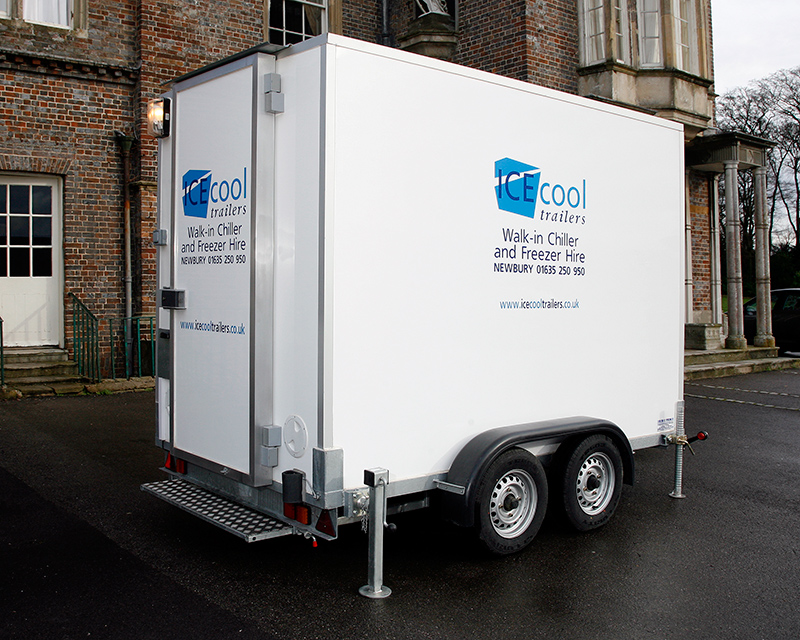
Regular readers of our blog know that emergency refrigeration is not limited to protecting food. There are numerous industries that rely on refrigeration and freezing capacity for day-to-day operations. Businesses in any of these industries could be adversely affected by an emergency that took down cold storage capacity. For example, consider a small lab operating at Imperial College London. They rely on cold storage to keep their brain bank in operation.
Yes, you did read that correctly. Imperial College London has a legally certified brain bank that contains hundreds of preserved human brains used for medical research. Each of the brains (all of which have been donated) is carefully labelled upon entering cold storage. When researchers need a new specimen for dissection, they choose one according to their needs.
The lab specialises in Parkinson's research. If you are not familiar with the disease, Parkinson's is a degenerative neurological condition that gradually causes a complete loss of motor function. Though rarely fatal, it is almost always debilitating to some degree. The brains donated to the college come from people who had Parkinson's as well as some who did not. Researchers compare the tissue in the hope of learning more about how Parkinson's progresses.
Tissue Must Be Kept Frozen
In order for the donated brain tissue to be viable for research, it must be preserved in an organic compound and frozen within 48 hours. The tissue must remain frozen until it is needed. As you might guess, Imperial College London goes to great lengths to make sure they have enough freezer capacity and that said capacity is reliable.
Industry-Specific Refrigeration Failures: Understanding Your Business Continuity Risk
Whilst the Imperial College London brain bank example is dramatic and immediately understandable, the broader principle applies across numerous industries: any business relying on cold storage for critical operations faces catastrophic risk if that capacity fails unexpectedly. Understanding your specific industry's cold storage dependency and failure consequences is the first step toward developing effective contingency planning. A pharmaceutical distribution facility storing temperature-sensitive medications faces not just inventory loss but potential liability if medications degrade to unsafe levels. A biotech research facility conducting time-sensitive experiments faces lost research data and grant funding implications if samples cannot be preserved. A blood bank faces both inventory loss and potential threat to patient safety if blood products spoil. A tissue repository like Imperial's brain bank faces loss of irreplaceable research material that cannot be replaced or reconstituted.
Beyond the immediate inventory loss, cold storage failures often trigger cascading business disruptions. Hospitals and clinics may need to reschedule procedures. Research projects pause mid-stream. Supply commitments to customers cannot be met. Regulatory investigations may be triggered if regulated products spoil. In highly regulated sectors like pharmaceuticals, medical devices, and research institutions, cold storage failures must often be documented and reported to regulatory authorities, creating additional compliance burdens beyond the immediate operational crisis. The financial impact extends far beyond replacement inventory costs – it includes lost revenue, delayed research timelines, damaged customer relationships, potential regulatory penalties, and reputational damage. Understanding these multi-layered consequences specific to your industry helps justify the investment in contingency planning and emergency refrigeration agreements. A pharmaceutical distributor that invests in a pre-arranged emergency refrigeration agreement with Icecool Trailers is not just protecting inventory – it is protecting revenue continuity, customer relationships, and regulatory standing. This strategic perspective transforms emergency refrigeration from an expensive inconvenience into essential business continuity infrastructure.
What would happen if their freezer failed? The college would have only a short window of time to procure emergency refrigeration or get their freezer up and running again. Icecool Trailers is an emergency refrigeration provider that could answer the call with same day, emergency delivery was it ever necessary.
As an alternative to refrigerated van hire, our trailers and walk-in rooms are quickly dispatched throughout the Greater London area by fully trained technicians who deliver the units, set them up, and make sure they are working properly before they leave the customer's site. We can have emergency refrigeration and freezer units dispatched across the region in a matter of hours.
Creating Your Cold Storage Contingency Plan: Beyond Hope and Prayer
Most businesses and institutions rely on hope that their cold storage equipment will not fail. Few take the proactive step of developing documented contingency plans before an emergency occurs. This approach is particularly dangerous in regulated industries where cold storage failures may trigger mandatory incident reporting and investigations. Creating an effective contingency plan requires identifying your critical cold storage needs, understanding your failure scenarios, and pre-arranging solutions before crisis strikes.
The first step is conducting a cold storage audit specific to your operations. What temperature ranges are critical for your products or materials? How long can critical specimens or products survive outside optimal conditions? What is the financial impact of losing one day's inventory versus one week's inventory? Do you have any regulatory obligations to maintain uninterrupted cold chain documentation? Once you understand your specific needs, you can engage with Icecool Trailers to discuss pre-arranged emergency response agreements. These agreements specify the units we can deploy, response time commitments (same-day or within-hours deployment for critical situations), and pre-negotiated terms so there is no delay in securing equipment during actual emergencies. A research institution might pre-arrange for a walk-in freezer to be held ready for emergency deployment. A pharmaceutical facility might arrange for multiple freezer units that can be mobilised on short notice. A blood bank might negotiate guaranteed same-day delivery response with backup units on standby. Having these arrangements documented and tested in advance means that when a failure occurs, your response is coordinated and immediate rather than chaotic and delayed. We have worked with numerous medical facilities and research institutions on contingency planning, and those with documented plans and pre-arranged emergency agreements consistently experience better outcomes during actual emergencies – minimised losses, faster resumption of operations, and reduced regulatory complications. The time to develop your contingency plan is now, before an emergency forces you into reactive crisis management mode.
Whatever the Need, We Will Meet It
It is true that the vast majority of our customers are involved in food service in some way, shape, or form. But emergency refrigeration is not exclusive to food storage. We have clients involved in the tech sector that require temporary refrigeration to protect sensitive electronic components. We work with medical facilities requiring cold storage to preserve specimens.
Regardless of need, we can meet it. We encourage businesses, non-profits, and educational institutions across our service area to consider what they will do in the event their cold storage capacity is ever interrupted. Now is the time to make contingency plans, rather than waiting until an emergency arises.
Sources:
Mirror – http://www.mirror.co.uk/news/uk-news/theres-room-full-human-brains-11319645
